
The Budds were involved in the social and economic life of Tramore for much of the nineteenth century. Contemporary records place members of the family in Tramore, Passage and Dunmore East, where they worked in occupations ranging from cabinetmaker and publican to merchant and farmer. The surviving evidence points to connections between these places, although the precise relationships within the wider family remain difficult to establish.1
James Budd of Market Street
James Budd was already a familiar figure in Tramore by the 1830s. He appeared on a list of publicans at Tramore in a letter addressed to Lord Doneraile in 1831.2 In September 1836 he resigned his position as a process server, an office which involved serving legal notices. He was described as a grocer in Sherman’s Directory (1839).3 By the mid-1840s, he was also identified as a timber and coal merchant.
Despite his standing and business interests, James Budd’s name does not appear among the subscription lists of the Tramore Relief Committee during the Famine.4 This absence does not establish that he gave no assistance privately or directly to people in need. It is nevertheless a notable omission in the surviving record.
Tramore was not untouched by the desperation that accompanied the Famine. In October 1850 Budd’s shop on Market Street was burgled. The Waterford Mail reported that the thieves took two-pound notes, four half-crowns, a quantity of copper coins and various shop goods. The premises included a large shop and yard and was valued at £14 a year in Griffith’s Valuation. Two men, Timothy Cashin and Michael Barry, were found guilty and sentenced to ten years’ transportation.5
Interestingly, one of the jurors, William Budd of Passage was identified as James Budd’s brother. William was also a publican, who had raised a large family in the 1820s.6
A further burglary took place two years later. In January 1852, the Waterford Chronicle reported the prosecution of Thomas Tobin for breaking into Budd’s house and stealing property. Tobin was found guilty and sentenced to ten years’ transportation.7
Budd also took part in the public life of the town. In January 1851, he proposed a resolution at a meeting convened after an incendiary attack on a rick of hay belonging to Patrick W. Power. The meeting condemned the attack and organised a subscription to reward anyone whose information led to the offender’s conviction. When Power left the chair, Budd was asked to preside. The episode suggests that he was regarded as a person of standing in the community and was trusted to take a leading role in the public response to a serious crime.
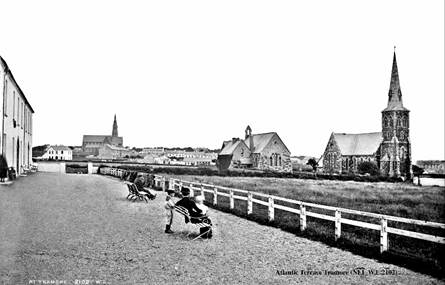
Budd’s interests extended well beyond his shop. In 1849, a newspaper advertisement offering a house with substantial grounds for letting, formerly occupied by William Christmas, directed prospective tenants to apply to ‘Mr James Budd, Tramore’. Valuation records show that Budd held more than fifty acres at Crobally, as well as numerous houses on the Old Waterford Road, leased from Patrick W. Power. He also held land on Church Road, leased from Lord Doneraile, where he built Atlantic View Terrace. The valuation evidence identifies the five houses as newly built and records them as Budd’s property, with an annual valuation of £15. At least one was already occupied by a private tenant.8 This evidence does not support later claims that the terrace was built for the Coast Guard. Budd also let Albion House to Captain Herbert Clifford of the Royal Navy.
Not all his property was of the same quality. The pre-valuation records describe ‘Budd’s Court’ as ten small cottages, three of them thatched, in a badly situated and filthy yard containing a piggery. The contrast with Atlantic View is striking and gives some indication of the range of housing owned by Budd, from modest working-class dwellings to accommodation intended for more prosperous residents and visitors.
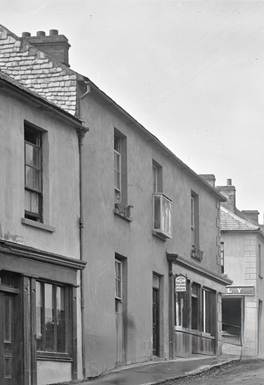
Budd also erected the three-bay building at the lower corner of Market and Main Streets, replacing an older structure that had fallen into ruin by 1850. Once completed, he leased the building to Caesar Fleury, a grandson of the Reverend John Cooke.
James Budd died suddenly on a Sunday evening in August 1853, having ‘dropped dead’. The Warder and Dublin Weekly Mail described him as a respectable shopkeeper and merchant. His wife Jane survived him and died in 1884, reportedly at the age of 97.
James and Jane had three daughters: Jane, Lydia and Catherine. Jane married James Crawford Ledley; Catherine married John Doyle; and Lydia, a draper, remained unmarried. The family’s property interests passed to their son, also named James, who became a prominent figure in Tramore during the second half of the century.
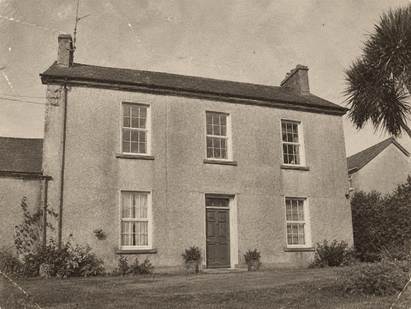
James Budd of Sweet Briar
The younger James Budd, born about 1830, had established himself independently before his father’s death. A deed registered in May 1853 records an assignment to him from Richard Hayes and Catherine Hayes of the remainder of a 500-year lease originally granted by Henry Sargent to Patrick Galway in November 1823. The property, known as Sweet Briar Lodge, included the dwelling house, out-offices, gardens, shrubbery, lawn and a large field. The deed gives its area as approximately three acres and thirty perches.
On 10 January 1855, the twenty-three-year-old James married Eliza Smith Blake at the cathedral in Waterford city. Eliza was the daughter of John Blake, a plumber. The day before the marriage, James, Eliza and her father entered into a marriage settlement under which the Sweet Briar property was conveyed to trustees for the purposes of the marriage. The settlement describes a larger property, measuring about five acres, three roods and thirty-seven perches. It also refers to several new dwelling houses and improvements already erected or to be erected there.
A daughter was born at Sweet Briar on 28 August 1856. A son, Alfred was born on 19 October 1857, and a second son Frederick William followed two years later in 1859.9 Eliza, known as Lizzy, died in September 1862, aged twenty-eight. In June 1863 James married Catherine Bowers, daughter of Thomas Bowers of Ooning, County Kilkenny.
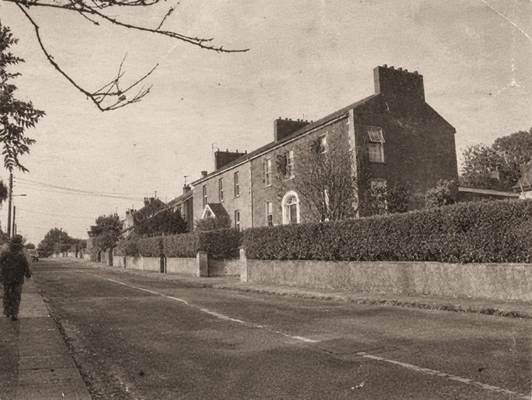
James’s property dealings continued over the following decades. A mortgage dated August 1858 records a loan of £1,000 from Waterford merchant John Wilson, secured against a number of properties in Tramore, including ground in the Hill Quarter and premises occupied by several tenants. Later deeds record further leases, mortgages and dealings on property in Main Street, Market Street and elsewhere. A lease of June 1863 to James Crawford Ledley is particularly interesting in a family context, him being Budd’s brother-in-law. These instruments reveal a substantial and active property portfolio.
Lifeboat and public affairs
James was closely involved in the public affairs of Tramore. In December 1861 he was among the leading local figures involved in plans for a new Protestant school premises. He was appointed one of five trustees of the project, as well as its treasurer, and formally proposed the adoption of Abraham Denny’s architectural plans.
His association with the Tramore lifeboat produced one of the most dramatic episodes of his life. On the night of 16 February 1858, a southerly gale drove the coal-laden Greek brig San Spiridione ashore in Tramore Bay. As the vessel had made no distress signals, its plight was not discovered until daylight.
The Tramore lifeboat was launched through heavy surf, but the exhausted crew was forced to return. After the boat was hauled to a more favourable launching point, a fresh volunteer crew made a second attempt and succeeded in approaching the wreck. They could not get close enough for the sailors to jump aboard, however, and the Greek crew were unwilling to throw themselves into the sea.
A heavy sea then capsized the lifeboat. Supported by their cork lifebelts, three of the rescuers managed to regain the boat, while five others made for the shore and reached it safely. As the San Spiridione began to break apart, her crew were thrown into the surf among the spars and wreckage. The lifeboat was launched for a third time and succeeded in saving two men, while two others were rescued by people who waded into the surf as they approached the shore.
Budd, who was honorary secretary of the Tramore branch of the Royal National Lifeboat Institution, took a direct part in the rescue. Riding his horse into the surf, he succeeded in saving one of the shipwrecked sailors by throwing him a cork lifebelt. Such was the force of the sea that Budd himself was twice swept from his horse during the attempt.
Building in Tramore
Budd’s commercial activities brought him into several projects that changed the physical appearance of Tramore. In 1865, when a proposal was made to maintain the road between the end of the Longhouse Road and the old racecourse, the county surveyor considered the difficulties so great that the work was hardly worthwhile. Budd disagreed and persuaded the jury of the road’s advantages, with the result that the presentment was passed.
The following year he joined Edmond Power, Abraham Denny and Joseph Fisher in petitioning the county grand jury for a pier. Budd remained involved with the structure in later years, including efforts to repair it following repeated storm damage, but the sea eventually prevailed and the pier was destroyed in February 1883.
He was similarly involved with the development and protection of the Strand Road. Following serious storm damage in 1869, Budd and Edmond Power proposed a more ambitious scheme the following year to protect 303 yards of the road by piling. Budd argued that gravel provided the best natural protection and proposed throwing shingle between the individual piles to create a barrier against the sea. The jury accepted the proposal.
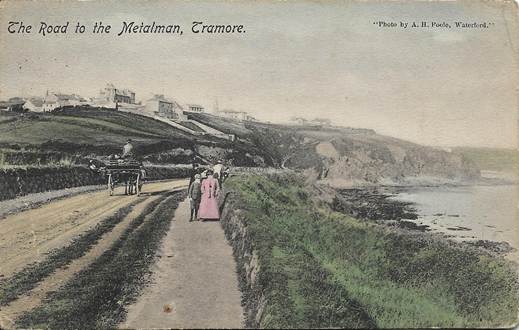
In May 1872 the Waterford News reported that the ‘new circular road’ at Tramore was being constructed by ‘the contractor, Mr. James Budd’. The newspaper predicted that the road would become a ‘splendid, salubrious walk or drive’, commanding views of the sea, cliffs and harbour.10
He was also a substantial farmer, holding land at Crobally and Drumcannon. A report on the harvest around Tramore in 1871 noted the exceptionally promising condition of local crops and singled out Budd’s farm, where he had ‘very fine wheat and potato crops’. The same report praised the crops of Walter Hally, but its commentary also made a pointed criticism of the land system. It observed that the abundance produced by the people who sowed and reaped it was converted into rent, while the peasantry remained poor. The article continued:
The wet has blackened and damaged the early meadows; but it has served the grass and late meadows, and only for the oat crop would be too short to reap. About Tramore, the crops never presented a more promising aspect. In ’47 the fatal blight showed itself first about the seacoast This is all very cheering, so far; but the poor peasants who sow and reap all this abundance are never permitted to use it in their homes. It is converted into “rent,” and squandered out of the country, while the peasant almost starves on potatoes and salt. Landlordism—that giant evil of Ireland — must be abolished before the great mass of the Irish people can hope to live in peace and plenty.11
His contracting activities were not always free from controversy. In February 1887 Budd became the subject of a protest by the ‘idle masons of Tramore’, supported by the United Trades Club of Waterford. The dispute concerned labourers’ cottages which Budd had contracted to build for the Waterford Union.
The United Trades Club complained that Budd was employing farm or road labourers to build the cottages rather than skilled tradesmen, describing it as ‘a state of things against which we feel it our duty to protest’. The club argued that the practice was unfair not only to the tradesmen but also to the ratepayers who were paying for the cottages and called upon the guardians to intervene.
The Tramore masons were more forthright. In a letter signed by John O’Brien, Patrick Phelan, Thomas O’Brien and Timothy O’Brien, they complained that they had been waiting for six months for the cottage-building programme to provide employment after a difficult winter. Budd, they claimed, had contracted to build a cottage for £90, considerably more than another contractor who had taken cottages for £67, yet was using labourers rather than masons to carry out the work. According to the letter, the other contractor employed tradesmen at thirty shillings a week, while Budd could pay a labourer ten shillings.
The masons resented seeing men with families to support ‘walking the streets of Tramore’ while work which they regarded as belonging to their trade was being given to cheaper labour. Their frustration was expressed with some humour. They suggested that Budd might as well provide his labourers with aprons and trowels ‘so that they might look like masons’, before reminding him of the old saying, ‘Let every cobbler stick to his last. So ought Budd.’
The Board of Guardians heard the complaint, although Budd also had his defenders. One guardian who had known him previously recalled that he was ‘not only the largest employer in Tramore but was a foolishly generous man’. Alderman Redmond maintained that ‘the claims of the regular tradesmen should be attended to’.
The board ultimately declined to intervene, having concluded that it had no power to determine the trade dispute. It arranged for the cottages to be inspected by its clerk of works and the local government board engineer. The board did not, in the surviving report, decide whether the masons’ allegations were justified. The episode is nevertheless revealing: it records a local dispute over skilled work, wages and the use of cheaper labour, and shows that the masons’ complaint had the support of an organised trade body beyond Tramore.
The Flying Course
Budd’s interest in sport was evident by the 1860s. In 1870 he was named on the committee of the Tramore Cricket Club, which had a ‘handsome and commodious house’.12 In 1873 a horse trainer and others in his employment were accused of trespassing while exercising horses on William Malcomson’s reclaimed land at the Back Strand.
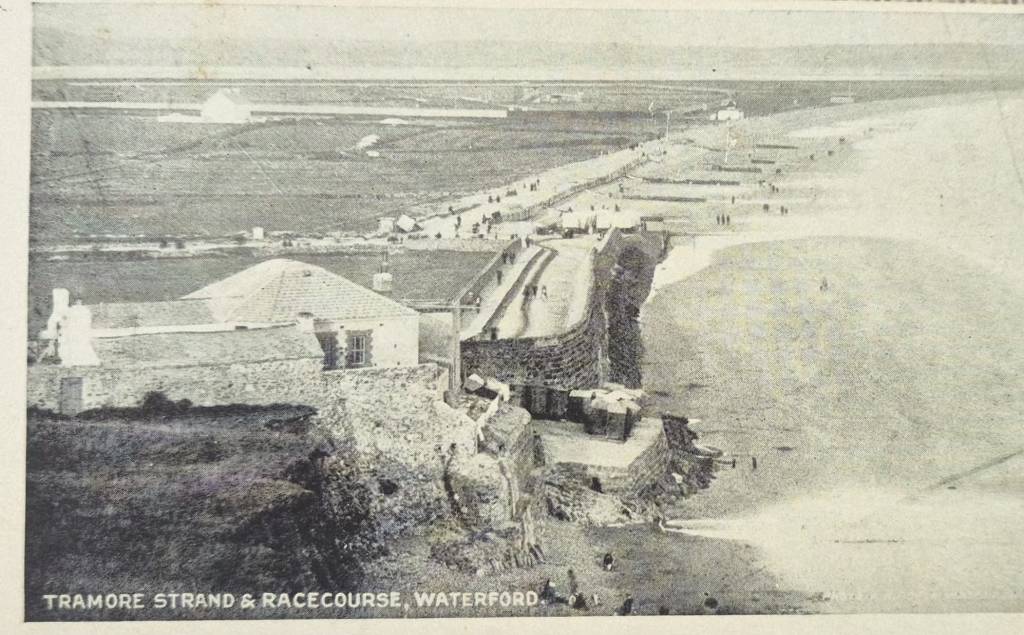
The financial difficulties that subsequently overtook Malcomson’s interests created an opportunity for Budd. By June 1877 he had taken the Back Strand on a long lease and was contemplating the construction of a new racecourse, complete with stand-house, paddock and the other facilities required for organised racing. A newspaper considered the venture commercially promising and suggested that two meetings annually could attract substantial fields of horses. It also proposed the formation of a joint-stock company to assist with the management of the enterprise.
The development of the Flying Course appears to have formed part of a broader investment by Budd in the reclaimed Back Strand. In January 1878 he mortgaged property which included his interests in the reclaimed Back Strand to the National Bank. Although there is no evidence that the mortgage was raised specifically to finance the racecourse, its timing suggests that Budd’s racing venture formed part of a larger programme of investment in the newly acquired property.13
The surviving deeds also show that ownership of the Back Strand was considerably more complicated than later accounts sometimes suggest. Budd did not simply purchase the reclaimed land outright from William Malcomson. His interest formed part of a chain of leases, assignments and mortgages relating to the reclamation and surrounding properties. What Budd acquired was sufficient control of the land to develop the new Flying Course, while the underlying legal interests remained more complex.
The development also marked a change in the geography of Tramore racing. Racing had taken place in the vicinity of the Back Strand before the principal reclamation works, but Budd’s new course occupied reclaimed ground and should be distinguished from its predecessors.
James’s son Alfred was already organising sporting events in Tramore before the new Flying Course opened. In August 1878 he was appointed secretary of the committee arranging the Tramore Regatta. That December, the Waterford News reported that he was the originator of a proposal to hold hurdle and flat races on the strand on St Stephen’s Day.
In October 1879, James and Alfred were working together to promote racing. The Munster Express announced that steeplechase and hurdle races would take place over the old Tramore racecourse the following month. It attributed the initiative to the ‘liberality of Mr. James Budd, who has given the land’, and the ‘spirited action of his son, Mr. Alfred Budd’.
By the summer of 1880 the new racecourse was ready. An advertisement for the meeting of 27 July announced the Tramore Steeplechase, Hurdle and Flat Races over the ‘New Flying Course, Back Strand, Tramore’, with six races and a total of £215 in advertised prize money. The principal event was the Waterford Town Plate, a handicap worth seventy sovereigns. Other races included the Farmers’ Plate, Amateurs’ Plate, Foxhunters’ Plate, Tramore Plate and Railway Plate. Applications for programmes and further information were directed to Alfred, who was named as honorary secretary.14
Alfred’s involvement was substantial. Contemporary reports credited him with the careful preparation of the ground and the arrangements for the meeting, while James remained the principal figure associated with the property. The opening attracted considerable attention, with later accounts placing attendance at between six and eight thousand. Whatever the precise figure, the meeting was regarded as an encouraging beginning.
The completed establishment included a substantial timber stand-house, with accommodation beneath for weighing, dining and other purposes, together with a paddock and facilities for horses, officials and spectators. Later descriptions regarded the Flying Course as one of the finest provincial racing grounds in Ireland.15 Its layout accommodated both flat racing and steeple chasing, while the surrounding drainage and enclosure helped distinguish it from the earlier, more open courses.
Alfred’s work in organising racing was recognised publicly. In October 1881, the Waterford News reported his departure for the Cape of Good Hope, crediting his ‘enterprise, industry, and capacity’ with bringing the Tramore racecourse and races ‘to the highest level of perfection’ in a short time. It said that his departure was much regretted. The wording of the report– ‘where we are sure he will very rapidly make a prosperous home’, suggests that he may have intended to establish a life in South Africa.
Maintaining a racecourse was expensive. The ground required regular preparation, buildings had to be maintained, and attractive programmes depended upon sufficient prize money to encourage owners and trainers to enter their horses. In November James advertised the racecourse for letting by the year, describing it as being in ‘full going order’, complete with stand-house and surroundings.16
By May 1882 Alfred had returned from the Cape. The Waterford News reported that he had organised a race meeting for the Tramore season, praising his work and anticipating success ‘as heretofore’. Bad weather affected the 1882 meeting, however, and the racing in Tramore entered a quieter period, with annual meetings confined to one or two days organised by Waterford racegoers for several years.17
James also served as a land valuer. The Waterford Mail, 12 January 1844 carried a compliment to James for his service in this role:
At the Waterford Sub-Commission Court on Wednesday, it was stated that seventy-five per cent of the tenants on Mr Lane Fox’s estate, which had been valued by Mr. James Budd, Tramore, had expressed themselves satisfied to accept his valuation as a fair rent, and the judicial rent was in those cases by consent settled without coming forward for hearing.
This is but another incident of the impartial and independent way in which Mr .Budd has ever discharged his duties as valuer either for landlord or tenant. In several estates both in Waterford and Tipperary, his valuation has given equal satisfaction, hundreds by it being spared the expense and trouble attendant on having their cases discussed in the courts. At all the commissions Mr Budd has been examined at, he has been from time to time complimented on the fairness of his valuations.18
The death of James Budd
An advert for ‘bone and blood manures’ in 1896, attributed to James, a claim, that he farmed 500 acres, and had won over sixty medals for roots and other farm produce.19 If accurate, the figures give a sense of the scale of his agricultural interests and the recognition j his farming had received. They add an important dimension to the familiar descriptions of him as a gentleman farmer and racing enthusiast.
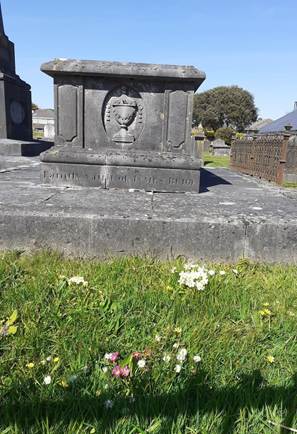
James Budd died at Sweet Briar Park on 24 October 1896, aged sixty-six, after suffering from typhoid fever for sixteen days. His funeral was described in the Munster Express as one of the largest witnessed in Tramore for many years. Residents from all sections of the community assembled to pay their respects, while large numbers travelled from Waterford by railway. His sons, Captain Alfred Budd and Frederick Budd, were among the principal mourners.20 James was buried in the family vault in the graveyard attached to the Protestant church.
By the time of his death, Budd had been involved in an unusually broad range of Tramore life. He had farmed substantial holdings, developed and managed property, undertaken public works, participated in coastal rescue, served on local committees and helped create a dedicated racecourse on the Back Strand. His activities also occasionally brought him into conflict with others, as the masons’ grievance of 1887 illustrates. Taken together, the surviving evidence presents neither simply a gentleman farmer nor a businessman, but one of the more active figures in Tramore’s development during the second half of the nineteenth century. He was survived by his wife ‘Kathleen’ who died in 1913 at the age of 89. The death certification was witnessed by her son Frederick.
Alfred Budd
Alfred evidently had a taste for travel. Following the 1882 race meeting, he was again away from Tramore for an extended period. In July 1884, the Waterford Mail reported that he had arrived in Dublin after a ‘lengthened tour through Australia, China, Japan, Frisco and the United States’. The newspaper described him as a ‘popular and well-known sportsman’ who looked extremely well after his travels.
Two months later, on 15 September 1884, the National Bank obtained a judgment against Alfred in the Court of Exchequer for £478 6s. 10d., plus costs of £4 11s. 0d.21 The entry appears in a contemporary list of bonds and judgments. It establishes the judgment and the amount involved but does not explain the circumstances behind the debt.
On 1 April 1885, Alfred received a commission as a lieutenant in the Royal Lancashire Artillery Militia and was promoted to captain the following year. Militia appointments involved recommendation and patronage, although the circumstances of Alfred’s appointment have not been established.
During the Second Boer War, the Army and Navy Gazette reported in February 1900 that Captain A. J. Budd had been ‘seconded whilst employed by Royal Artillery, South Africa’. A report in the Lancashire Evening Post on 27 June 1902 listed Major A. J. Budd of the Lancashire Militia Artillery among officers returning from South Africa aboard the Assaye. The War Office medal roll provides a further record of his South African service.22
Alfred eventually attained the rank of major and settled in England, but retained his connections with Tramore, returning to the town in the early years of the twentieth century. His career as a race organiser, his extensive travels and his military service in South Africa took him far beyond the town, though his association with Tramore racing remained part of local history.
Frederick Budd
Sweet Briar Park passed to Alfred’s brother Frederick William, who remained closely associated with the property and its business interests, including the Sweet Briar Park Dairy.
Frederick was closely associated with the local hunting scene. A visitor in 1905 described him as the ‘sporting Tramore magistrate’. The same report noted that he had inherited Sweet Briar Park from his father, James, whom it described as one of the leading and most respected gentlemen in West Waterford. The property had extensive stabling, riding horses and kennels. The reporter remarked that the stables were ‘fit almost for the needs of a mansion’ and praised the condition of the box stalls and harness room. The 1905 account also recalled Alfred’s earlier connection with the racecourse, saying that he ‘had command of the racecourse which M. J. Murphy now runs with such marked success’.23
Like his father, he was also involved in the property and public affairs of Tramore. In January 1893 he joined M. J. Murphy in promoting a scheme for a seawall and promenade along the Strand Road. Nearly twenty years later, lands associated with Frederick at Graun Hill became the site of the new racecourse in 1912.
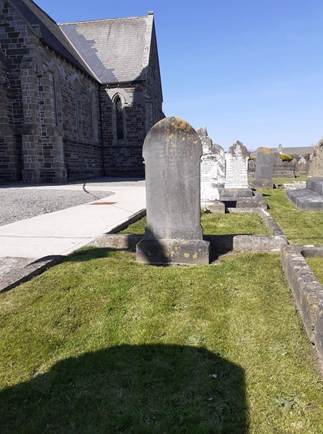
Frederick married Jane Catherine Croome in November 1898, but the couple appear to have had no children. Jane died at Sweetbriar Park in January 1931, and Frederick died there in January 1942, aged eighty-three. His obituary described him as ‘one of the best known residents of Tramore, and during his lifetime he had associations over a very wide field’. It also noted that he had served as church warden at Christ Church for many years.24
Conclusion
The Budds’ involvement with Tramore thus extended across much of the nineteenth century and into the twentieth. James Senior combined commerce with an extensive portfolio of land and housing. His son became a farmer, contractor, property holder and prominent participant in local affairs, while Alfred and Frederick carried elements of the family’s sporting and property interests into another generation. Their story is closely intertwined with the physical development of the town itself: Atlantic View, Sweet Briar, the roads and seafront, the Back Strand and, ultimately, the racecourse at Graun Hill. The Budds were builders and developers of Tramore as much as they were farmers or racing men.
- James Budd, a cabinet maker at Dunmore East, died ‘at Tramore’ in January 1838. He may have been the father of James Budd of Tramore and William Budd of Passage. ↩︎
- Doneraile Papers c. 1607-1950, National Library of Ireland, MS 34,131(1-6). ↩︎
- T. Sherman, Sherman’s Directory of Ireland (1839). ↩︎
- Waterford Mail, 3 April 1847. ↩︎
- Waterford Mail, 16 October 1850. ↩︎
- Waterford Mail, 22 January 1866, reported that Commander William Budd, United States Navy, a native of Waterford, had received $38,318 in prize money for the capture of the Memphis during the American Civil War. The newspaper described it as the largest single amount paid to a United States naval officer for captures during the conflict. This may be William’s eldest child, baptized in Kill St. Nicholas on 17 October 1819. ↩︎
- Waterford Chronicle, 10 January 1852. ↩︎
- Drumcannon Pre-Valuation Books. ↩︎
- Boston Pilot, 28 November 1857. ↩︎
- Waterford News, 31 May 1872. ↩︎
- The Northwestern Chronicle, Volume 5, Number 45, 23 September 1871. ↩︎
- Waterford Chronicle, 7 June 1870. ↩︎
- Munster Express, 30 June 1877. ↩︎
- Munster Express, 29 May 1880. ↩︎
- Contemporary descriptions of the new racecourse, reproduced in Andy Taylor, ‘Horse Racing in Tramore’, Munster Express Racing Supplement, 8 August 1997, pp. 4–5. ↩︎
- Sport (Dublin), 5 November 1881. ↩︎
- Irish Times, 24 July 1882. ↩︎
- Waterford Mail, 12 January 1884. ↩︎
- Munster Express, 7 March 1896. ↩︎
- Munster Express, 31 October 1896. ↩︎
- Commercial Gazette, London, 2 October 1884. ↩︎
- Army and Navy Gazette, February 1900; War Office medal roll, WO 100/147, concerning A. J. Budd’s South African service. ↩︎
- Waterford News, 1 July 1905. ↩︎
- Waterford Standard, 17 January 1942. ↩︎


Leave a Reply