
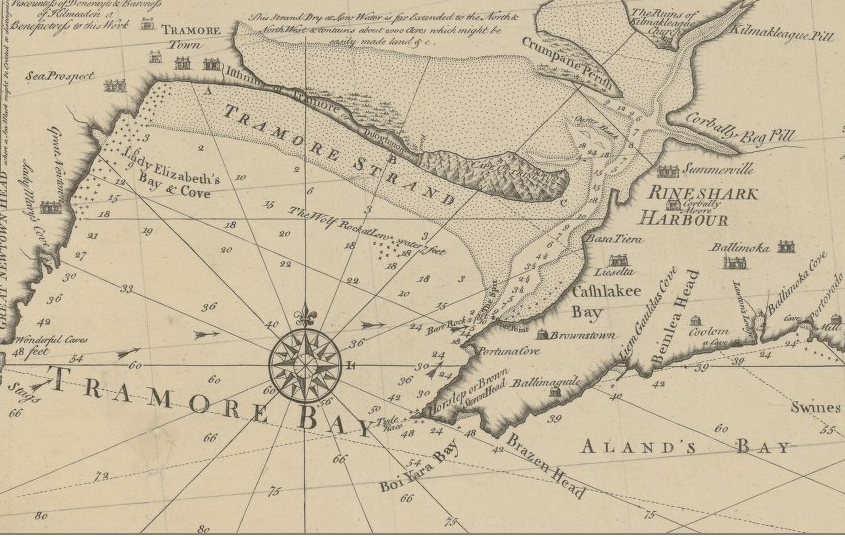
In 1738, William Doyle surveyed the coast of east Waterford and published a chart based on his findings. Doyle noted that Tramore Bay was notorious for shipwrecks and ought to be carefully avoided. Tramore is marked as ‘Tramore Town’ on the chart and two significant houses appear in close proximity to the strand, another where the centre of town is now located, a house named Sea Prospect in the area of what is now the Doneraile Walk, a house at Newtown near the then named Lady Mary’s Cove and another house at Garrancrobally. Tramore’s ability to attract the well to do back then was in evidence in 1743 when Edward Lee, the Recorder of the City of Waterford bought the lease for Great Newtown from Stephen Worthvale and later built a house there. The Worthvales were long term tenants of the Donerailes going back to the days of John Otterington’s ownership in the late 17th century.

The Birds
One of the most notable leaseholders that we come across in early 18th century Tramore is George Bird. The Birds or Byrds had been leasing property in Tramore for many years previously. In 1689-90, a Michael Byrd was described in the papers of John Otterington as the foremost tenant of Tramore. While a land grant between Otterington and Henry Nicoll dated 10 December 1691 referred to ‘that part of Tramore set to Ann Bird’.1 George married Isabela Brock of Trinity parish on 25 November 1706 in Christchurch in Waterford and the couple started a family together the following year.
There are several deeds concerning Tramore property in the early 18th century to be found in the Registry of Deeds. The Registry was established by an Act of Parliament in 1707, a penal enactment aimed at securing the rights of the Protestant Ascendancy. Regardless of its intended purpose the Registry resulted in a great collection of Irish deeds coming together in one collection that has been described as ‘A most valuable storehouse of history.’2 Deeds come in several different types, mainly leases, mortgages, marriage settlements, and wills. One such deed, dated 29 June 1727, details George Bird, who was described as a farmer, leasing ‘one moiety or part of Tramore’ from Lord Doneraile with Doneraile reserving for himself, all glebes on the property and ‘the full benefit of all royalties of fishing, fowling, shipwreck and all other advantages that may be thrown in by the sea and wind on the strand’. The Donerailes often stood to gain from such clauses, as an incident that occurred five years later attests, when three ships were wrecked on the same day in January 1732. From the London newspapers:
We hear from Tramore near Waterford in Ireland, that on Saturday morning last three ships were lost in that bay, viz. one from Harve, laden with apples, on board of which was Sir Richard Levings, who, with the crew, were saved; one from Bordeaux, laden with wine, whole crew, except two boys, were lost; and one from the west of England, laden with bark and staves, the crew saved.3
Included in the deed was ‘the grazing of Doughmore commonly called the Little Island’, (now known as the Rabbit Burrows) the whole under the yearly rent of £25 payable half yearly. A later document describes the Burrows as containing ‘upwards of 100 acres of excellent grazing ground, fit for young cattle’.4 Bird was to provide three days labour of man and horse and ‘two couple’ of hens a year out of every house or cabin on the property. He was also obliged to grind and tuck all his grist and oats at Lord Doneraile’s mills. Furthermore, he was obligated to ‘doe suit and service to his Courts Lett.’ In other words, he was obligated to attend Lord Doneraile’s court. This type of court presided over by the lord of the manor mainly dealt with the duties and services owed to the landowner.5 Following the death of Lord Doneraile later in the year, George surrendered his lease to Tramore to Lady Doneraile in a deed dated 14 February 1727.6 However, this was just a formality as he was then issued a new lease to the property for a term of three lives. George then sublet parts of his Tramore property to various tenants on long term leases.
On 5 March 1746, he leased three quarters of an acre of land to Reverend Edward Thomas, Clerk, Doctor of Laws, for the yearly rent of £1 10s for a term of three named lives. Thomas who was the rector of Drumcannon from 1743-51, then built the Turret House on this property.7 In Bishop Pococke’s ‘Tour of Ireland’ published in 1754, the author related the story of when he visited Reverend Thomas in Tramore in 1752:
On the 18th I went from Waterford to Tramore Bay, passing by Balinemona the seat of Mr. Carew. Tramore Bay is about two miles broad, and has an exceeding fine strand, a rivlet falls into it at the east end where the tide coming in, makes the north strand, divided from the other by a strip of land and some sandy hills, and it contains if I mistake not near 2000 acres, and when the tide is in, it appears like a fine lake. There is a great concourse of people of late to this place, in the summer to bathe, and to drink the salt water: and My Worthy friend Dr Thomas Archdeacon of Lismore and Vicar General of the Diocese, has built a turret here, in a beautiful situation, with one large room up one pair of stairs, and great conveniences under it.8
The lease describes the location of the property as just west of ‘the road leading to Mr Christmases house’. Thomas Christmas had built this house and a stable on property also leased from Bird. Following his death, his widow Elizabeth demised the property back to Bird, who then sold his interest in it together with the stock and household furniture that was there at the time of Christmas’s death to William Evans Morres of Kilcreene in the Liberties of Kilkenny City and Thomas Osborne of Waterford City. The sale dated 17 July 1752 also included Bird’s interest in ‘one moiety or part of Tramore ‘together with the free liberty of grazing on Doughmore and ‘the use of the rabbits therein contained’.9 The following year on 13 March 1753 George lease a house and garden to a mariner named John Power of Tramore for the term of 21 years. The lease included ‘the grazing of five sheep’. Interestingly, the total yearly rent was £1 2s 6d. which was broken down as 10s for the house and garden and 12s 6d for the grazing. The deed was witnessed by two other Tramore men, Joseph Bird and Robert Browne both farmers.10 George Bird died in the year 1762 and was buried in Crook on 11 August.
Sea Bathing
Travelling to the seaside to go swimming was a popular pastime since at least the 1740’s. In his book on Waterford published in 1746, Charles Smith referred to Tramore as a village, which in summer was a pleasant retreat for the citizens of Waterford and others who assembled for the benefit of the saltwater. The church of Drumcannon was in repair with constant services in it. However, ‘besides the parish church and some houses at Tramore’ he added that there were few other improvements in the parish.11 It is noteworthy that Doctor Richard Russel’s work on the benefit of saltwater which is often credited with having created the fashion for seaside resorts in Britain and Ireland was first published in Latin in 1750 and in English in 1752, some six years after Smith’s description of Tramore.12 Further afield there is more evidence for the popularity of sea bathing prior to Russel’s publication, a memo from the Pembroke Estate, dated 30 July 1747 stated that ‘the People of Dublin have taken the whim of bathing in the sea, and Irishtown is crowded with lodgers.’13
The Rogers
The Rogers were perhaps the most influential family to settle in and around Tramore in the latter years of the 17th Century. They first appear in the records for the area when on 6 September 1698, John Rogers of Crobally leased 27 acres of land in Tramore from Samuel Firth. Furthermore, on 27 June 1715 Rogers signed an indenture of renewal with Arthur Lord Viscount Doneraile and Lady Elizabeth his wife for part of ‘the lands of the town and lands of Tramore commonly known as Wise’s part of Tramore’ containing eighty-eight acres of profitable land.14 John and his wife Mary had at least four sons, namely, John, Henry, William and Benjamin. Two years after the publication of Russell’s work, on 21 December 1754, Benjamin advertised Tramore in The Dublin Journal informing would be investors that he had two large new slate houses with plenty of land adjoining them, suitable for use as taverns or as public lodging houses, available for lease in Tramore:
Whereas there has been a general complaint at Tramore for some years past for want of a proper accommodation for gentlemen, ladies, and their attendants. This is to acquaint the public that there hath been lately built there two large slate houses with very convenient out-offices fit either for a private family, tavern or a publick lodging house, to be let together or severally, for any terms of years or lives, with a sufficient quantity of land adjoining them. Small lots of ground will likewise be let for any terms of years or lives to any person or persons who are inclined to build thereon upon giving their plan and agreeing for the rent, will have houses built without further trouble. Tramore is the best outlet from Waterford been but five miles distant from that city and an excellent road. There is from both the above houses an extensive sea and land prospect, one of the finest strands in the world, located for the conviency of bathing and drinking the waters and for the quality of the air. Whoever are inclined to treat for the same, may apply Mr Benjamin Rogers at Monmohogue near Waterford or in term time to Mr Richard Hinde, attorney in Temple Court Castle Street, there they will be further informed.15
Public Houses
In the years following Benjamin’s advertisement, there were at least two prominent public houses operating in the town, Coughlan’s and Bird’s. By 1764, Mary Coughlan had an inn in Tramore to cater for the gentry. At this time, Tramore was regularly visited by gentry from the city, but the journey could be hazardous as poor Barry Gardener found out on 19 August 1766. He was returning to Waterford from Tramore, where he had been to ‘take the air upon the Strand, when he fell from his horse, and broke his neck.16 Joseph Bird, possibly a son of George, also traded in Tramore as a publican, his death being recorded in Finn’s Leinster Journal on 20 January 1776. The lease to Joseph’s public house was surrendered some years before his demise and taken up by Patrick Morressy who also became involved in the catering business.
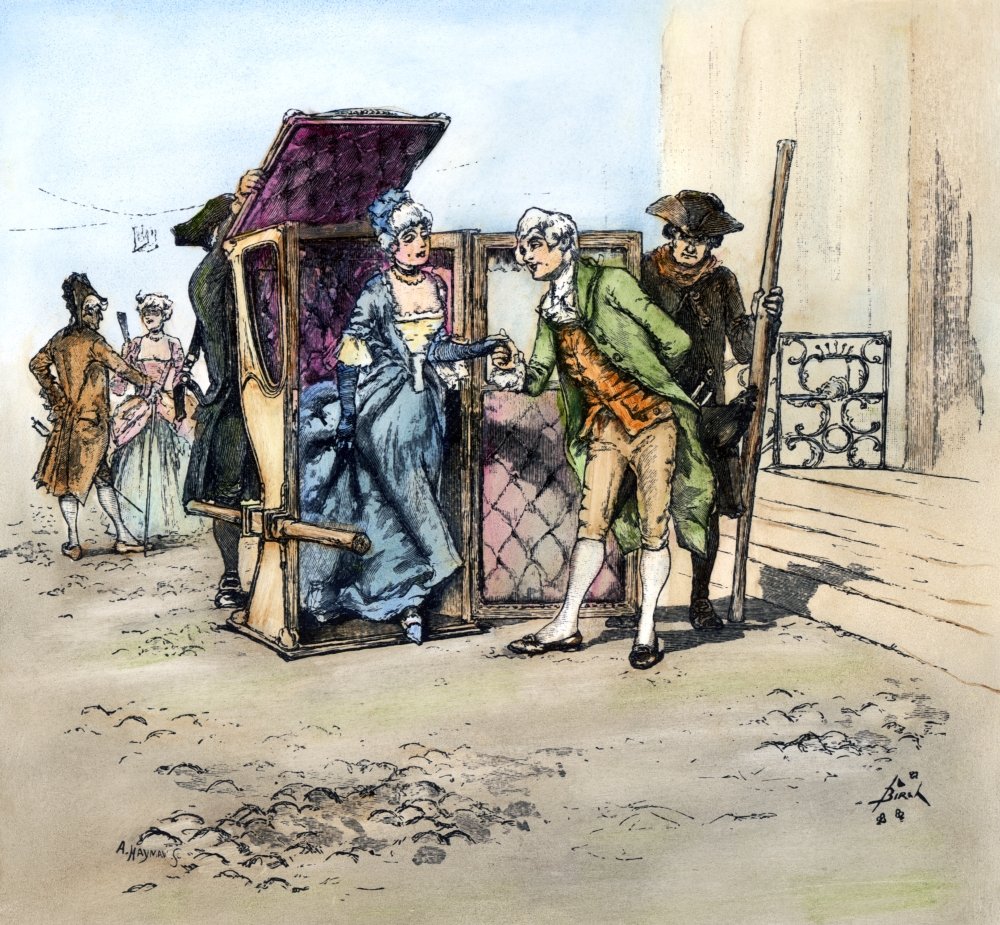
On 13 August 1774, Morressy leased the property from John Rogers which was described as: ‘the house wherein Joseph Bird formerly dwelt and a chair house, brewhouse and stable, a kitchen garden and two fields behind the house, eight acres plantation measure. Bounded on the east by the lands of Crobally, on the west by the High Road of Tramore, on the north by the holding of John Greene Esq. and Miss Alice Quin and on the south by Miss Mary Graves’s holdings, for 31 years at £28 per year. A chair house was a building in which were stored sedan chairs. It would have been a difficult job for a pair of men to carry one of those with a passenger from the strand up the hill to the Old Waterford Road.
Both public houses were situated on the Old Waterford Road. From the description of the boundaries of the Morressy’s property, his public house was most likely the house on The Old Waterford Road that became known as ‘The Villa’, which was in ruins in the 1890’s. This property was formerly known as Tramore Lodge and was at one time the home of Edward Lee Esq. Furthermore, when Mary Coughlan renewed the lease on her public house 9 June 1809, the boundaries of her property were described as ‘nearing and bounding’ on the north by a part of Mr Edward Lee’s concerns, on the east by John Maher’s dwelling house and back houses, on the west by the main road from Waterford to Tramore and on the south by the main road, a street leading from said concern to the strand’.17 From this we can conclude that Coughlan’s Inn was in the location of O’Neil’s pub today.
Morressy was most likely renewing the lease on a property that he already possessed, as two years previously, he placed an advertisement in Finn’s Leinster Journal, on 16 June 1772, stating that the publicans of Tramore had entered into an agreement to overcharge their customers. To counteract this, he offered to entertain nobility and gentry for the sum of 18 shillings each person per week:
Whereas a report has prevailed in the city and county of Kilkenny, that the publicans of Tramore have entered into combinations not to entertain gentlemen &c. at the usual prices: Now I, Patrick Morressy, of Tramore, do hereby publickly advertise, that I will entertain nobility, gentry or ladies for the sum of eighteen shillings, each person per week, children and servants half price as usual and choice grass for the horses.18
This small advertisement reaffirms that there were several public houses in Tramore at that time, catering to a considerable volume of visitors, with Morressy confident enough of Tramore’s pulling power to place it in a Leinster newspaper.
Accommodating the Gentry
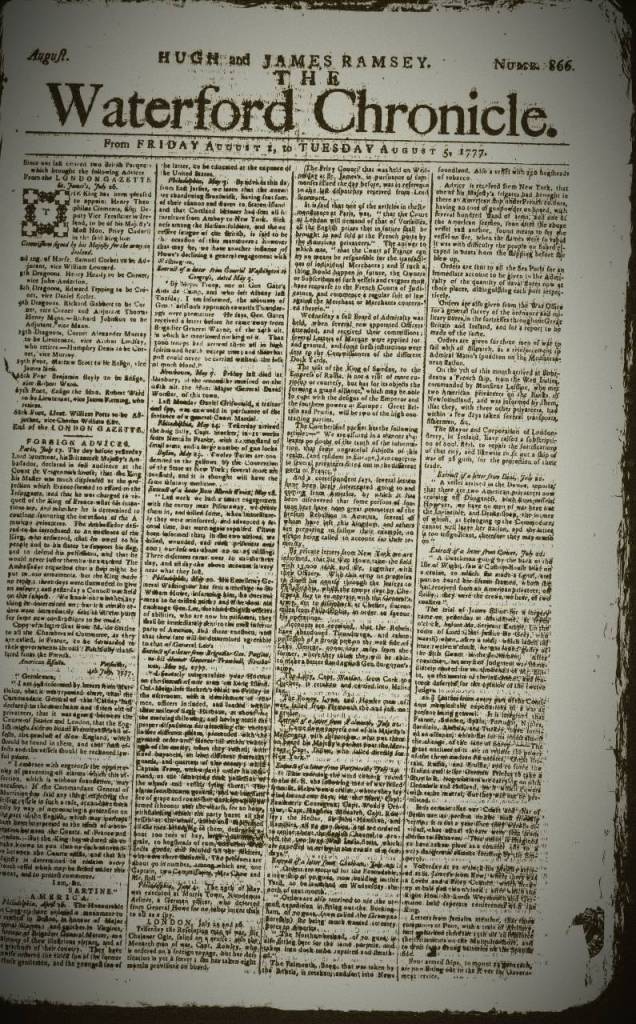
Irish newspapers were first published towards the end of the seventeenth century, but at first, they were mainly political newsletters without much local information. The earliest Waterford newspaper with copies still in existence is the Waterford Chronicle founded circa 1765. Unfortunately, of the early editions only some miscellaneous issues from 1771 and a nearly complete run from the years 1777 are available to the public. However, what is available serves to give us a partial image of Tramore at that time. On Tuesday 6 August, Lord Wandesford arrived in Waterford city, from his seat in Castlecomer; and was reported to have left immediately to go to Tramore.19 This is a reference to John Wandesford who was created Earl Wandesford in the peerage of Ireland in 1758.
Another distinguished visitor to Tramore was Lord Carrick. There’s an old story about him visiting Tramore in the 1770’s and was ‘so pleased with the appearance of the place and so benefited by a few plunges in the sea, that he purchased a piece of ground adjoining the Turret and built a house on it’, which the family frequented for several years. Lord Carrick’s House is mentioned in a later deed from 1790, which reads: ‘the dwelling house, out offices, garden, coach house, stable and yard then late in the possession of John Goone Esq. commonly known and called by the name the Lord Carrick House together with the two fields at the front and rear of the said dwelling which two fields contain by common estimation three acres and a half..’ On 28 October 1774 John Greene of Greenville County Kilkenny leased 13 Acres 3 roods 10 perches of land in Tramore from John Rogers.
The boundaries of this property were described in some detail, ‘Bounded on the east by the lands of Crobally. On the west by the high road leading from Newtown to Waterford. On the North, partly by a new road or passage leading to the high road from Tramore Bay to Waterford and partly by Thomas Murphy’s holdings. And on the south, partly by the holdings of Samuel Barret Esq and partly by the holdings of Patrick Morrissey’. The new road or passage through the premises was excluded from the lease, where it was further described as leading from the town of Tramore to the high road from Newtown to Waterford. This new road was to become known as Greene’s Lane and later as Pond Road and the house in question was either in the location of Eastlands or Tramore House. The lease was for the duration of the lives of Thomas, Robert and Anthony, sons of John Greene at a yearly rent of £31 8s 6d.
In March 1777, John Greene advertised the house at Tramore Bay called the ‘Terret’ with a coach house, and stable for four horses, a garden, and one acre of choice land walled in, to be let, or the interest sold during one life. The furniture was also to be sold at a valuation. The advertisement stated that ‘For elegance of situation, and convenience for sea bathing, nothing can exceed it.’[19] The following month, he advertised the ‘elegant house with all convenient out offices and fields lately occupied by Captain Samuel Barrett, thorough repair and completely furnished. A large quantity of choice old wines of various kinds in bottles, cyder, beer and porter and a rick of well saved splend hay’.
Several other gentlemen of means had substantial properties available to let in Tramore in the 1770’s. For instance, William Izod advertised the interest in his lodge on four acres of well enclosed land in November 1770. Three years later, on 28 April 1773 Izod again advertised ‘a complete slated lodge in good repair. The Waterford merchant, John Porter advertised his house to let, along with snug and well-built warm cabins near the strand in January 1772. Some of the cabins in Tramore appear to have been built near each other as three years previously in July 1769, we find that a cabin in the town went on fire and threatened an adjoining cabin. In April 1772, another Waterford city man, Philip Long offered to let a large commodious house near the strand with a good view of the sea, complete with a wine vault and beer cellar. Furthermore, on 3 June 1772, Mount Tennison, Henry La Rive’s property in Tramore was advertised to let.
Samuel and William Penrose published a notice dated 5 August 1777, in the Waterford Chronicle stating that they soon intended to bring their stock of timber in Tramore to Waterford. However, any gentlemen who were building or intending to build in Tramore would be given the opportunity to purchase as much as they wanted at as low a price as 35s 6d per ton, which if bought to Waterford would be 50s per ton. This timber was probably that salvaged from the ships The Four Sisters and The Two Brothers that were wrecked in Tramore Bay on 10 April.
The Newports, a Waterford banking family, also had property in Tramore in the 1770’s. Mrs Newport published a caution in the Waterford Chronicle dated 18 November 1777, warning that her kitchen maid, Anstace Cashin, took the keys to some of her locks when leaving her service at Tramore, despite being given ‘a good discharge’. Mrs Newport added that she required a new house maid, but anyone applying for the position would find their ‘whole character’ subjected to ‘the strictest enquiry’.
On 11 July 1777 Doctor Edmund Butler, member of parliament for Kilkenny, advertised the availability of the house where he lived at Tramore, with a coach house, stable, offices, garden and a very good field of three acres which he held for a term of 24 years. The house was described as well finished, dry, airy and roomy. To accommodate a purchaser part or the furniture could be had on a valuation and the premises could be entered upon immediately.20 In December 1777 Councillor Butler placed another notice in the newspaper advertising his house and concerns in Tramore at a great bargain. The house with its fixtures and all necessary offices was as complete as one would choose for a bathing lodge and the adjoining field was the best in Tramore. The rent was reserved at only £26 yearly.
Entertainment
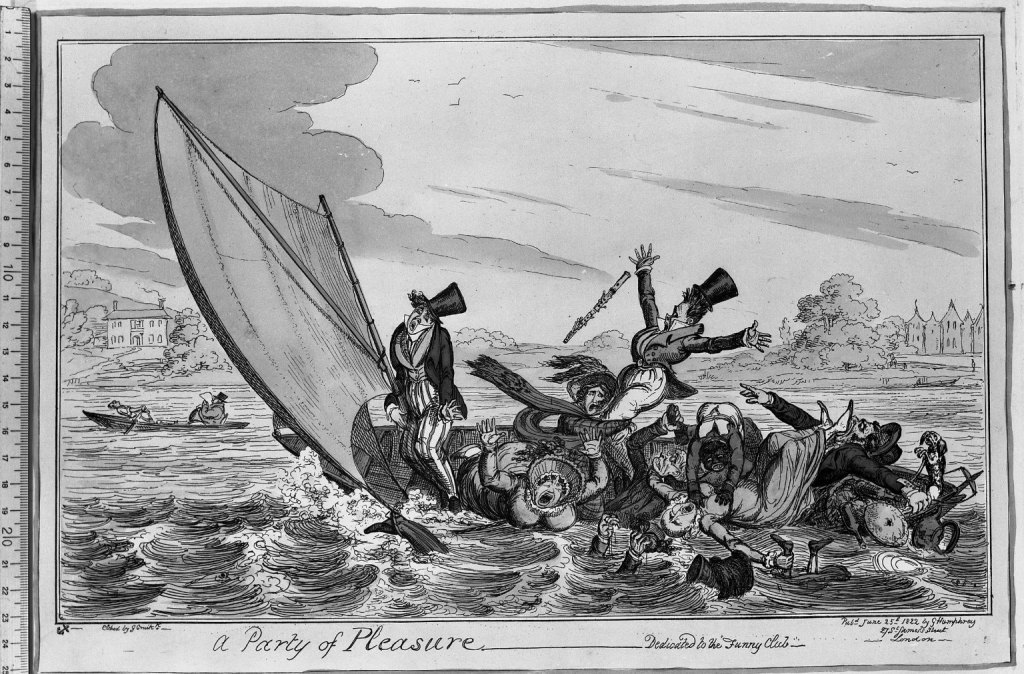
A popular pastime in those days was for well healed visitors to Tramore to take small sailing boats out into the bay in order to have a few drinks or a picnic while enjoying the view. These parties frequently ran into danger considered newsworthy enough to be widely reported in the newspapers of the day both here and in England. In July 1773, a group of ladies and gentlemen took a large wherry boat that belonged to Tramore, out into the bay. When a strong northwest wind sprung up, they were driven over fifteen leagues from the coast, and in the process lost the rudder of their craft. They spent two distressful days drifting, expecting to founder at any time, until they were rescued by a vessel from Tenby that passed by, took them on board and landed them safely at Youghal.
In July 1775, a servant man was riding to Tramore when he found a pocketbook on the road, which contained bills, &c. to the amount of £1500. It belonged a gentleman from Waterford who had gone there for the benefit of the water, to whom he honestly returned it. The gentleman presented him with three Guineas. Quite what the gentleman was doing with such a large sum of money on his person in unknown, but there may have been a card room for the gentry established in the town by this time.
By 1777, it is evident that horse racing had become popular at Tramore. A meeting was advertised in a local newspaper on 15 August for a race to be run on the Strand on Wednesday 27 August, by any horse, mare or gelding that never won a plate. The prize was a purse of ten guineas for the winner of the best of three four-mile heats. However, it appears that the race may have taken place a week earlier than first advertised as a Mr Underwood, of Bulling Rush in the county of Wicklow on his mare Rattling Bell won just such a race on 20 August beating five others, the event deemed important enough to be reported in the Waterford Chronicle.21 The lack of information on horse racing in Tramore at this time is probably a reflection of the lack of surviving Waterford newspapers for this period. Indeed, as horse racing was well established in Ireland by the mid eighteenth century, one wonders if it was a factor in attracting ‘the great concourse of people’ to Tramore as referred to in Smith’s History of Waterford at that time.

Places of Worship
As well as accommodation, refreshment and entertainment, visitors also required places of worship. The original pre–Protestant Reformation parish church serving Tramore was located on Drumcannon Hill. This church was in ruins by 1615, probably having been destroyed during the Elizabethan wars in the second half of the 16th century. However, the church was rebuilt and extended in 1735 under the orders of Bishop Milles of the Church of Ireland and served the protestant community for the entirety of the century. Whereas, catholic religious services, outlawed under the penal laws, were performed in a mass house at Pickardstown by Father Patrick Leahy from the time that he came to Tramore in 1764 until a new church was built in 1784, an act sometimes accredited to the Waterford banker, Bartholomew Rivers.

Conclusion
In conclusion, by the late 1770s Tramore had several substantial houses suitable to accommodate the gentry, as well as public houses to cater to their needs and even a local brewery. There were also cabins to be let to the less well-off, and no doubt they too had less salubrious public houses to frequent. Tramore’s inclusion in Taylor and Skinner’s Maps of the Roads of Ireland, surveyed in 1777, reflects this growth. Their policy was to survey all roads that were fit for substantial wheeled vehicles. The publication includes a map of the Old Waterford-Tramore Road. Of course, in those days in was the only road. It ran from John’s Hill, over Ballytruckle, Kilcoghan, Ballinamona, Ballykinsella and Drumcannon, descending at Ballynattin before rising again over the hill of Crobally and entering Tramore itself.

The town is represented by several buildings marked out on five recognisable roads. There are a several buildings marked on or near the Old Waterford Road as it enters the town, notably one to the west, one to the east, and two at the corners at the end of the road. The road then continues in the direction of Dungarvan (Priest’s Road). A third road runs down the hill with buildings on both sides (Main St), with a fourth cutting off to the right to where the Turret appears to be represented (Broad St). The fifth road runs further down the hill as far as the strand with a sizable building on the left and several others on the right (Strand St). There are three further buildings in the area of what would become Green Street without a road being marked. However, as noted above, in 1774 Greene’s Lane was recently built to connect the Old Waterford Road to the town.
- The Doneraile Papers, c. 1607-1950, National Library of Ireland, MS48326/17. ↩︎
- Sean J Murphy, ‘A Most Valuable Storehouse of History: The Registry of Deeds’, History Ireland, 17/1, January 2009. ↩︎
- London Evening Post, 13 January 1732, 17th-18th Century Burney Collection Newspapers. ↩︎
- Waterford Mirror, 3 November 1802. ↩︎
- Deed of Lease between Lord Doneraile and George Bird 1727, and Deed of Surrender between George Bird and Lady Doneraile 1727, Registry of Deeds, D52 528 35594 and D58 519 40352. ↩︎
- The Calendar Act 1750 was an Act of the Parliament, that reformed the calendar of England and the British Dominions so that the new legal year began on 1 January rather than 25 March or Lady Day. ↩︎
- Indented Deed between George Bird and Rev Edward Thomas 1746, Registry of Deeds, D126 30 85263. ↩︎
- Richard Pococke, Pococke’s Tour in Ireland in 1752, Corpus of Electronic Texts Edition, p.134. ↩︎
- Deed of lease and release, Registry of Deeds, Bird to Morres 1752, D158 162 105347. ↩︎
- Deed Bird to Power 1753, Registry of Deeds, D185 105 122404. ↩︎
- Charles Smith, The antient and present state of the county and city of Waterford. Dublin 1746, page 96. ↩︎
- Dr Richard Russell, Glandular Diseases, or a Dissertation on the Use of Sea Water in the Affections of the Glands, London 1752. ↩︎
- Aideen Ireland, ‘Some unusual sources for the history of medicine in the National Archives of Ireland’, National Archives Journal of the Irish Society for Archives, Winter 2008, page 12. ↩︎
- Deed of Lease between Lord Doneraile and John Rogers 1720, Registry of Deeds, D26 459 16306. ↩︎
- The Dublin Journal, 21 December 1754. ↩︎
- The Dublin Journal, 19 August 1766. ↩︎
- Deed of Lease between Nicholas Power and Mary Coughlan 1809, Registry of Deeds, D620 251 424610. ↩︎
- Finn’s Leinster Journal, 16 June 1772. ↩︎
- Waterford Chronicle, Friday 9 August 1771. ↩︎
- Waterford Chronicle, 14 March 1777 ↩︎
- Waterford Chronicle, 26 August 1777. ↩︎

 Tramore of Yore
Leave a comment